🦕 The Past
Dinosaurs & Ancient Eras
What was the Mesozoic Era? What was Phanerozoic time?
Today we are learning all about the past, present, and future! Lets start off strong with the past, and learn
all
about dinosaurs, all the past eras, and much more!
Starting off with the Mesozoic Era and everything in between.
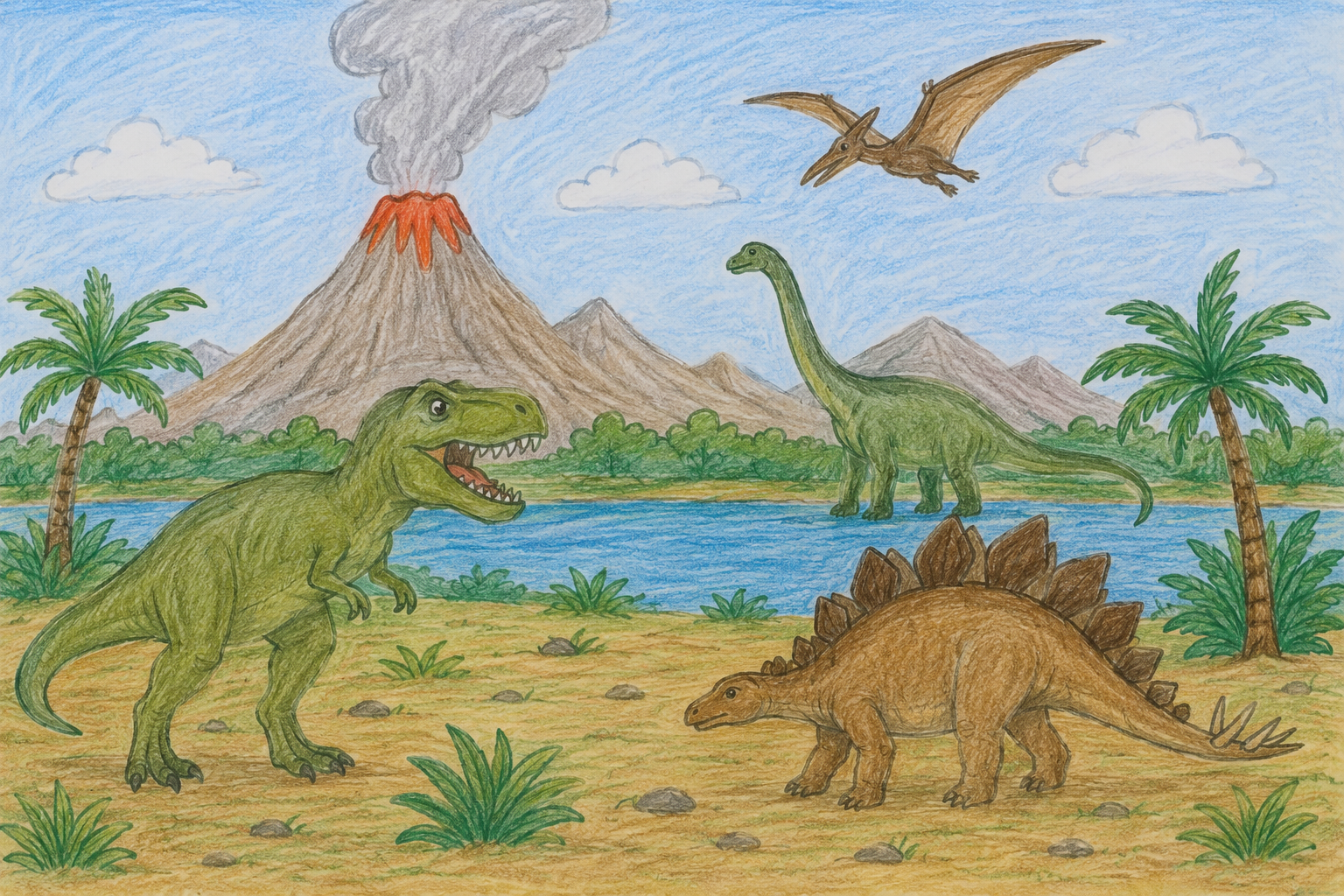
This era is divided into three periods: the Triassic, Jurassic, and
Cretaceous.
The Mesozoic Era began 252.2 million years ago.
The oldest period is the Triassic Period, going from 252 to 201 million years
ago.
All continents during this period were part of one land mass called Pangaea, meaning the
differences
between many plants and animals were minor. The climate during this time was relatively hot and
dry,
the land was mostly covered in deserts, and unlike today, there were no polar ice caps.
At the end of this period there was a large extinction event, and the causes are still widely
debated.
Moving onto the Jurassic Period, which was 201–145 million years ago.
(I do not really have much information for this period — even though it is the most widely known!)
So, skipping ahead to the Cretaceous Period — the most recent of the three. This
geological period ran from the end of the Jurassic Period to about 66 million years
ago.
The Mesozoic Era is actually one of three eras that make up the Phanerozoic
times.
The name "Phanerozoic" came from a Greek term for "middle life".
As if we haven't moved on enough, there's still one more thing to talk about: placental
mammals,
otherwise referred to as infraclass Eutheria. These are any members of the mammal group
characterized by the presence of a placenta — a vascular organ that develops during
gestation, which facilitates the exchange of nutrients and waste between the blood of a mother
and the blood of a fetus. Placentals include all living mammals except marsupials and
monotremes.
Certain types of scientists called palaeontologists study fossils from back
then
to see what life was like. These fossils come from all types of dinosaurs, which is how they identify certain
dinosaurs through their skeletal system and fossil remains.
🍁 The Present
Life as a Kid in Canada
What is life like as a Canadian? Well, that's what we're here to learn about! If you already
live here, you may
already know, but this is past, future, and present, so I should include all!
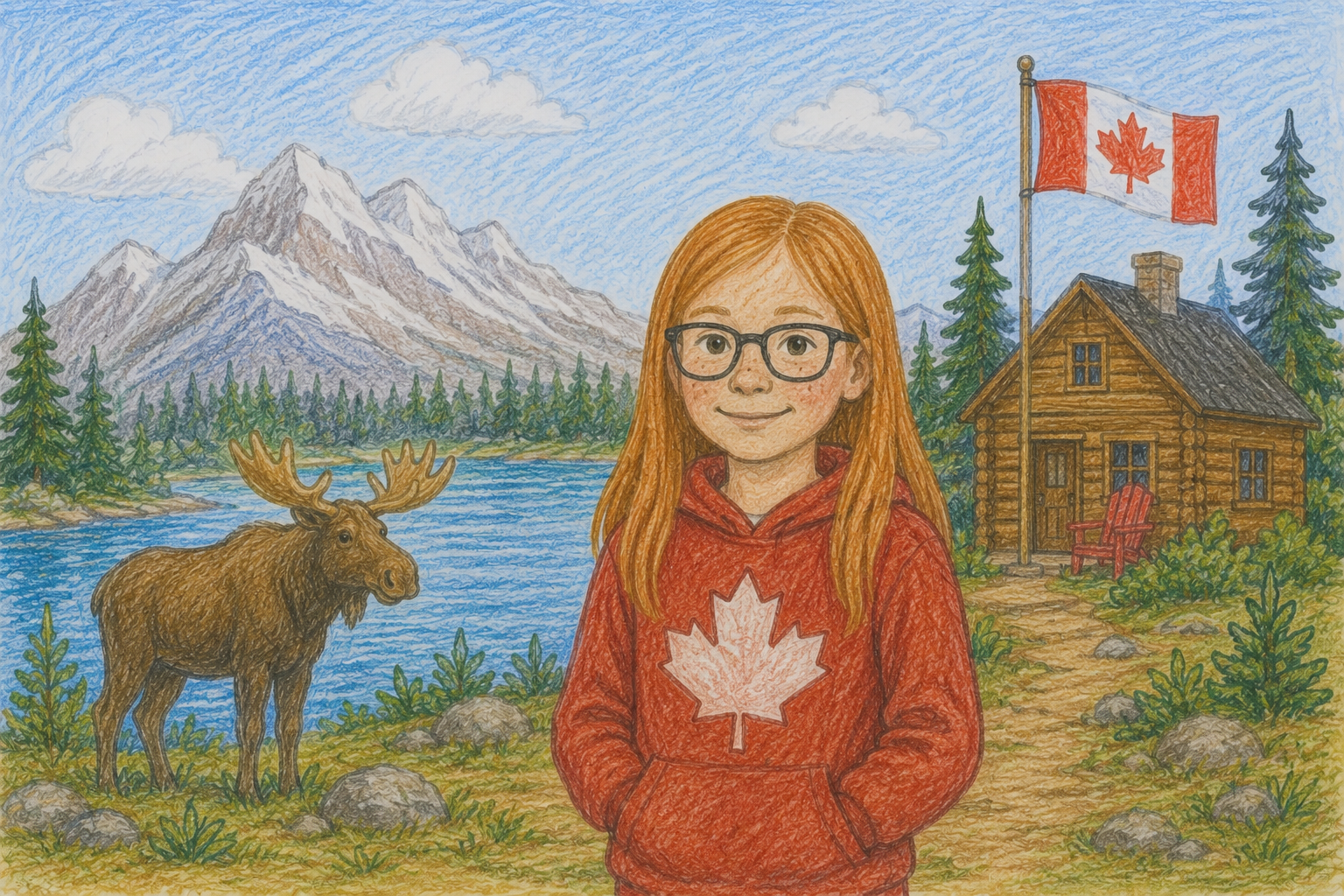
Life (for me!) in Canada is fun! It is full of fun opportunitys and challenges, sometimes life
can get hard, but
it's normal! It is full of technology, especially for me. There are tons of things to learn
every day, like new
math problems, science facts, or how to do something new! You almost always have something to smile about, like
when times get hard, there are people there who will talk to you and comfort you. Thats why I'm almost always
joyful (if you've met me) and I am always full of energy, I have something to bring out that joy and energy for.
Many people may not know this, but sadness is a good thing — when your sad, God wanted you to
be sad. Sadness
lets you feel your emotions, understand the way your body feels, it lets you express emotions before they get to
big and can't be controlled anymore.
Back to Canada! Life in Canada is full of adventures, like hikes, playing with friends, and
much more. Did you
know that about 5–7% of Canada is Indian, while 19.3% is Asian, and
15–32% are Canadian as their origin? Did you
know that Canada is the most diverse country in North America?
Random Fact About me: I no longer had any grandpas at the age of 10! Life can be full of losses, but
even then,
joy can still come threw — it shines the most!
My dad works at Southeast College, which is a
college full of technology and fun — my dad calls it his playroom. :)
He has a few 3D printers at work (3 to be exact). He is
an Applied Research Coordinator and he helps students learn by solving real problems (his
definition). My dad is
technically a teacher as well. He is very smart, and is really good with technology! Remember this is my
perspective of life, my life, my dad, and my joy!
My mom works as a nurse, she used to do things like surgery, but now she takes calls and things
like that. She
helps book appointments for people and is sometimes working for twelve hours. But in Summer she
has a lot more
time off work in 2026. She is often at work so we don't always get to see her. Sometimes I won't get to see her
for about a week! I love her so much, and will forever! If my mom is out there (also my dad and sisters) I love
you!
My life is amazing, and I don't regret any part of it, and you shouldn't either! You should be
grateful for what
you have and what you've done, because God loves you and makes life perfect!
🤖 The Future
Robots & New Technology
In the future, so many new, fun things are still to be discovered! These new, fun things could be
discovered by anyone! Who knows, maybe you will be the next inventor!
Technology is taking over! It is becoming a part of daily life, and before it didn't even
exist! Someone tell me
how that changed so fast! I'm not mad about it though because otherwise you wouldn't be able to see this!
AI is
getting better by the hour, making more realistic answers and images! Music is getting more
advanced and defined
as well as editing and videos! People used to do healthcare but it's already being taken over
by robots — they
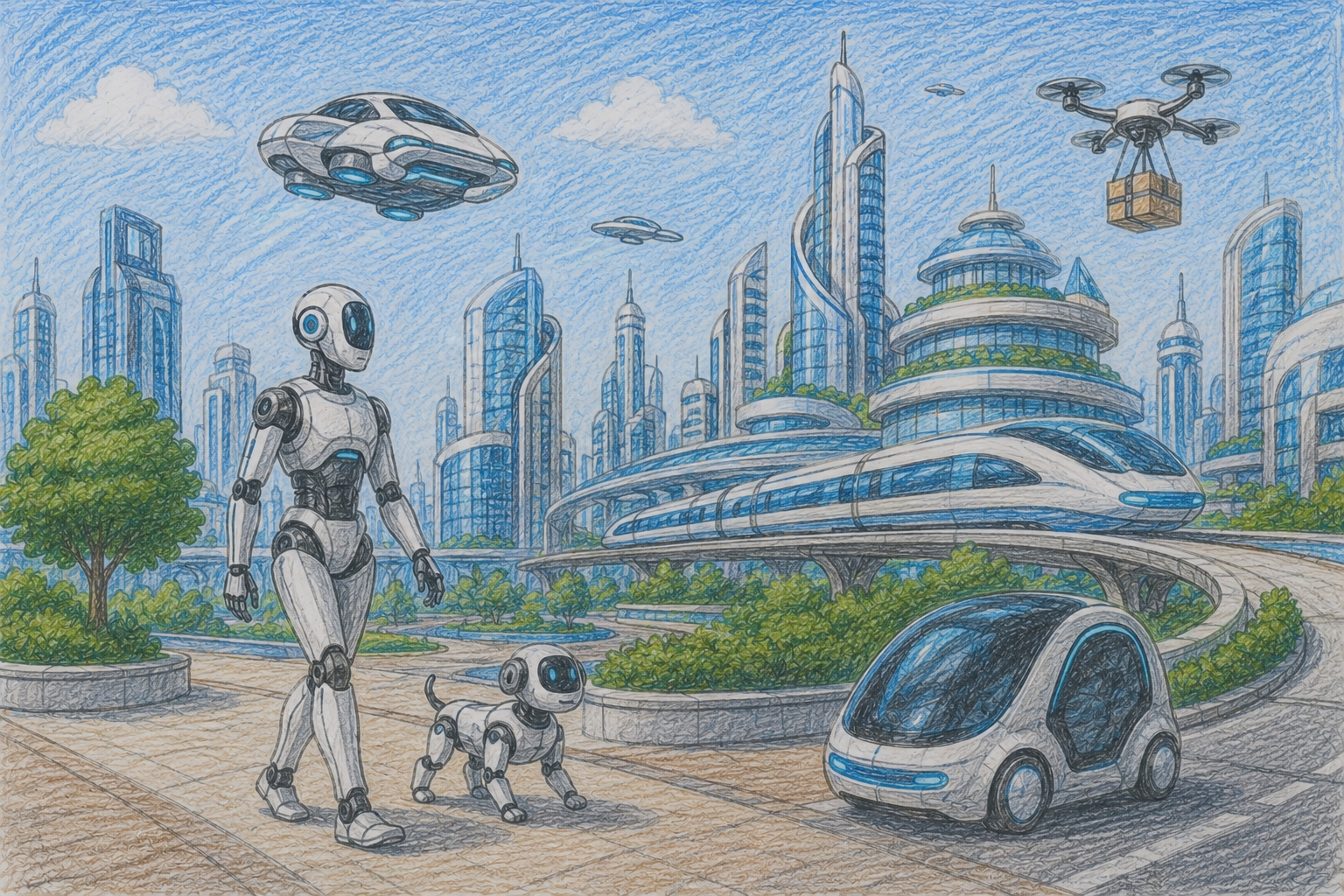
are still controlled and watched after by humans, but we gotta watch out! They could take over someday as you
may see in the picture above — no humans, and many robots. This is just what I
think may happen, and I won't specify when because I don't know. But it is not that I don't think people will
still be here.
But the future is nothing to worry about now — the future is not the present, it is the future, and many of
these
things may never happen, but there still is a chance. Not everything that happens in the future is necessarily
bad!